What Is an ACR? Autonomous Case-handling Robots Explained
An ACR (Autonomous Case-handling Robot) is a warehouse robot that rides on top of storage racks and picks individual totes or cartons — a category pioneered by China's Hai Robotics (海柔创新) in 2016.
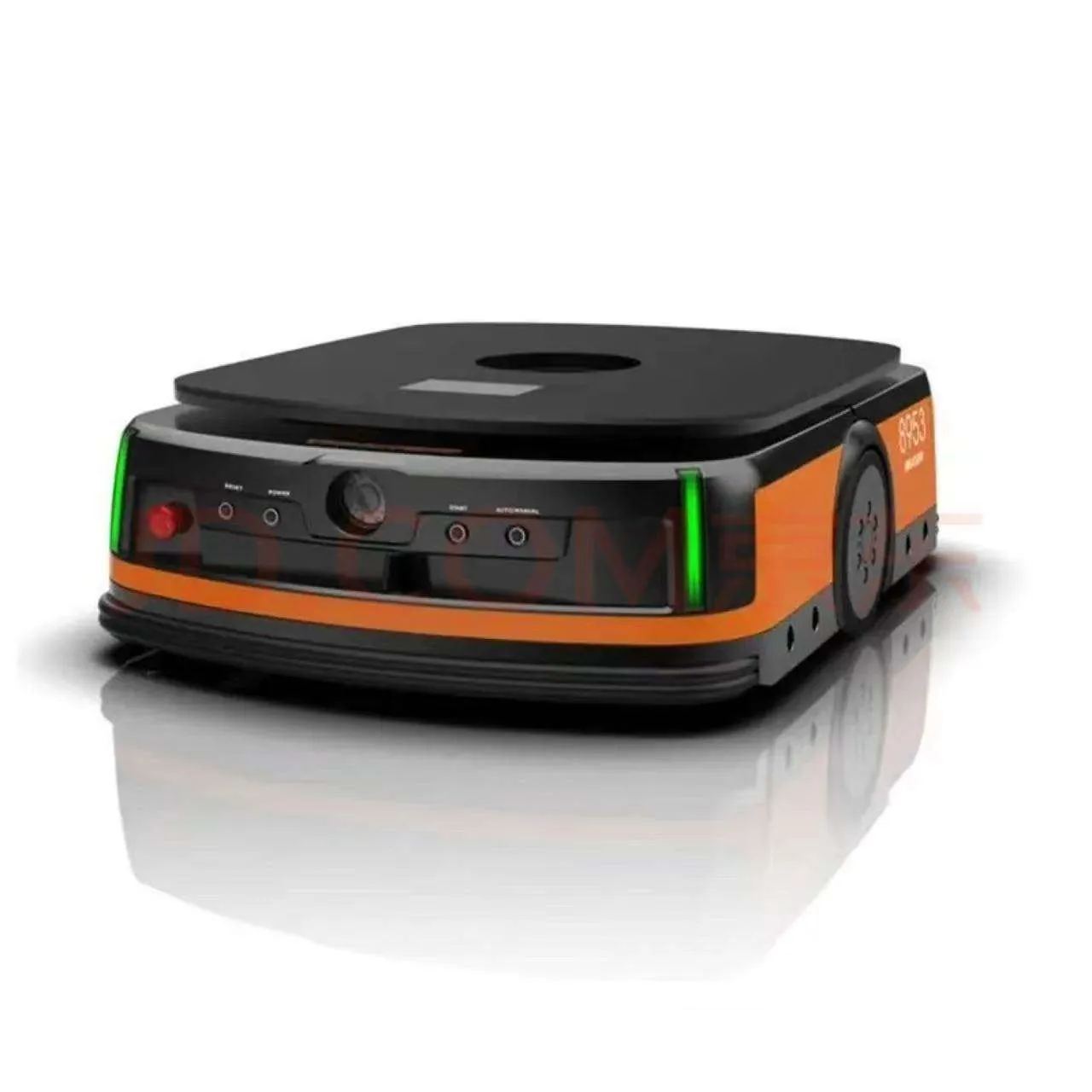
Direct Answer: What Is an ACR?
An ACR is a wheeled robot that lives on the rack structure itself. It climbs onto the top beam of a storage rack, extends a lift mechanism down to the correct shelf level, and picks or places a single plastic tote (or carton) without human touch. The tote is then brought to a workstation where a human picks the individual SKUs — a goods-to-person workflow with far higher storage density than floor-based AGVs.
The category was invented and standardized by Shenzhen-based Hai Robotics (海柔创新) with its HaiPick system, first shipped in 2017. Today "ACR" is sometimes used generically across Chinese warehouse-robot vendors, but when buyers outside China search "hai robotics acr" they are almost always asking about this rack-traveling tote-picking robot.
How an ACR Works
- Rack integration: Standard warehouse racking is modified with a rail/profile on the top beam where the ACR drives.
- Tote storage: Plastic totes (usually 500×400×300 mm) are stacked in the rack; multiple SKUs can share a tote.
- Robot travel: The ACR drives horizontally on the rack top between aisles, using laser SLAM or markers for navigation.
- Vertical lift: A telescoping mast reaches down to pick the target tote (typical 4–10 m rack height).
- Transfer to workstation: The tote is carried to a conveyor or lift that drops it to a picking station on the floor; the human picks items and the tote goes back.
ACR vs AGV vs AMR
| ACR (HaiPick) | AGV/AMR shelf carrier (Kiva/Geek+) | Robotic arm picking | |
|---|---|---|---|
| Travels on | Top of racking beams | Warehouse floor | Fixed or mobile base |
| What it moves | Individual totes / cartons | Whole shelves or pallets | Individual items |
| Storage density | Very high (vertical, narrow aisles) | Lower (wide aisles + shelf footprint) | Variable |
| Throughput (per robot) | ~60–100 totes/hour | ~40–60 shelves/hour | ~600–1,000 picks/hour (fixed cell) |
| Best for | SKU-dense e-commerce, 3PL, pharma | Big-box, bulk storage | High-volume single-SKU packing |
| Pioneer | Hai Robotics (China, 2016) | Kiva Systems (US, 2003) | Many, US/Japan |
Top Chinese ACR Vendors (2026)
| Vendor | HQ | Flagship ACR product | Notes |
|---|---|---|---|
| Hai Robotics (海柔创新) | Shenzhen | HaiPick A42 / A42D / Capro | Invented the category; deployed in 40+ countries |
| Geek+ (极智嘉) | Beijing | RoboShuttle RS8 / RS12 | Largest Chinese AMR vendor; added ACR line in 2021 |
| Quicktron (快仓) | Shanghai | Quicktron ACR series | Strong in JD and automotive logistics |
| Landwise (兰剑智能) | Jinan | A-Type AS/RS with ACR | Listed on STAR Market (688557.SH) |
| Wit (音飞储存) | Nanjing | ACR retrofit solutions | Traditional racking maker moving into robotics |
Typical ACR Use Cases
- E-commerce micro-fulfillment: Dense SKU count, fast turnover, limited warehouse footprint.
- 3PL contract logistics: Mixed-customer totes, rapid reconfiguration.
- Pharma & healthcare distribution: Controlled-temperature tote storage, traceability.
- Apparel & footwear: Seasonal SKU churn, high tote count.
- Automotive spare parts: Thousands of low-volume SKUs in compact racks.
Why Buyers Search "hai robotics acr"
Outside China, ACR is still a little-known category — most logistics engineers still think in terms of Kiva-style shelf-moving AMRs. When a warehouse manager starts researching dense storage automation and types "hai robotics acr" or "acr robot" into Google, they are usually at the very first stage of comparing HaiPick against a traditional AS/RS or a Geek+ shelf-moving system. This article exists to answer that question before they land on a vendor page.
Related Reading
- Hai Robotics (海柔创新) — Company Profile
- Geek+ AMR: The Chinese Warehouse Robot Giant
- China Robotics Company Database
Last updated: September 2026. Throughput figures are vendor-typical and vary by SKU mix, rack height and batch size.