China vs US vs Europe: The Humanoid Robot Market Race in 2026
The full scoreboard — production volume, cost, AI capability and deployment.
On September 24, 2026, Shanghai-based AgiBot (智元机器人) handed over its 20,000th humanoid robot to Chimelong Group — and with it, 300 units that now staff the world's first embodied-AI theme park on Hengqin Island. For context: the International Federation of Robotics recorded roughly 7,000 humanoid robots sold across the entire planet in 2025. One Chinese company has now produced nearly three times that number in nine months.
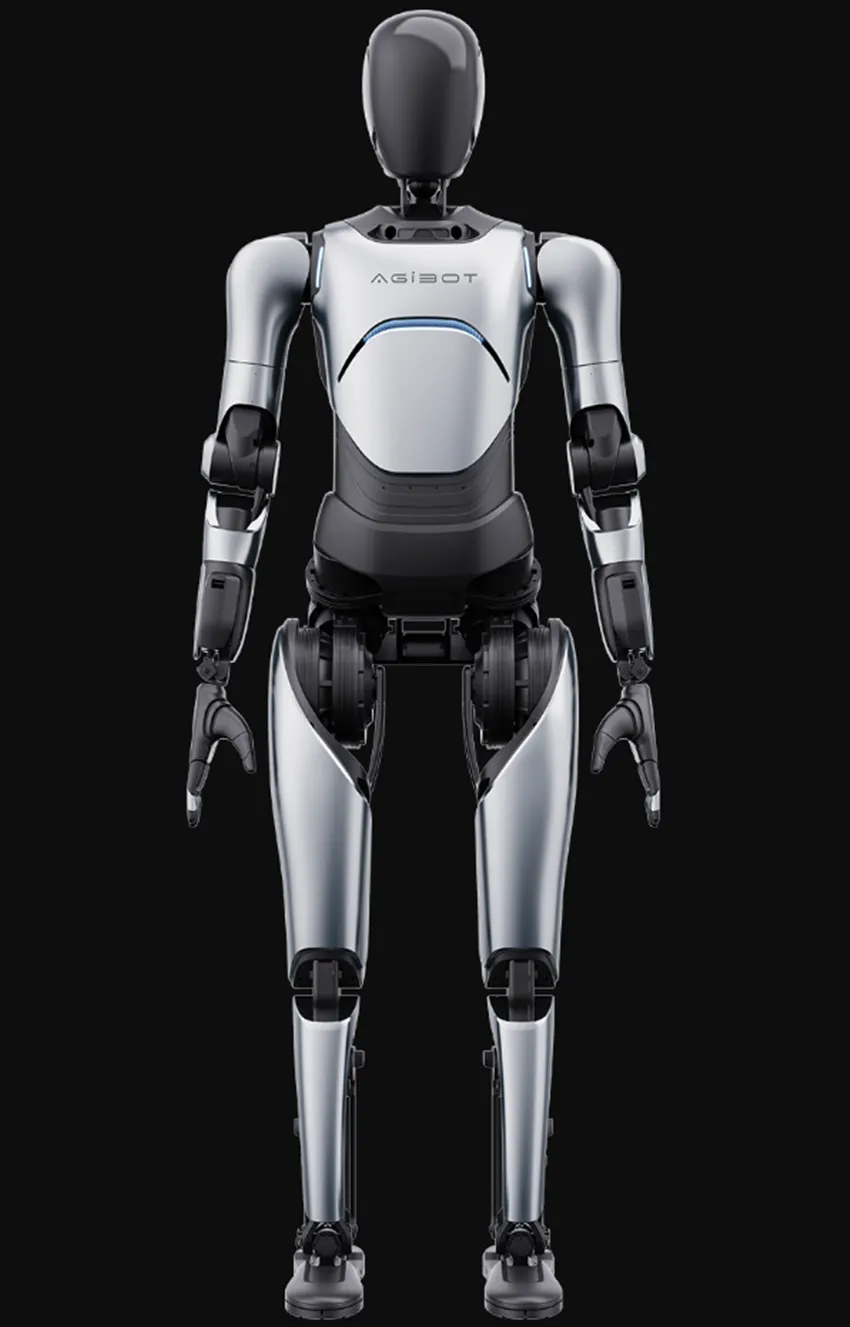
The number that matters is not 20,000. It is the denominator. The International Federation of Robotics' 2026 report records roughly 7,000 humanoid robots sold worldwide in 2025 — a year when Tesla, Boston Dynamics, Figure, Agility and every other Western humanoid program combined could not push past four figures. By September 2026, a single Shanghai startup has manufactured nearly three times that number. This is not a press-release milestone; it is a production-line fact, and it changes the frame of the entire humanoid race.
AgiBot and Chimelong Group launched the first phase of a large-scale embodied-AI deployment at Chimelong Spaceship (长隆宇宙飞船) on Hengqin Island, Zhuhai. More than 300 AgiBot robots are integrated into the park's daily operations — not as exhibits behind glass, but working alongside human staff in entertainment, science education, guided tours and guest services. The 20,000th unit rolled off AgiBot's production line specifically for this handover, linking a manufacturing milestone with one of the company's largest real-world deployments.
The two companies also unveiled a joint Embodied AI Cultural Tourism Research Institute at the park — a signal that the deployment is not a marketing stunt but the first of a planned pipeline of humanoid applications in tourism, hospitality and public spaces.
AgiBot announced its 10,000th unit in March 2026. By September it had doubled that. To put that in context:
| Milestone | Date | Cumulative units |
|---|---|---|
| First humanoid (A1 / Edu) | Early 2024 | ~100 |
| 1,000th unit | Q3 2025 | 1,000 |
| 10,000th unit | March 2026 | 10,000 |
| 20,000th unit (Chimelong handover) | Sep 24, 2026 | 20,000 |
| Global humanoid sales, full-year 2025 (IFR) | CY2025 | ~7,000 (entire world) |
Sources: AgiBot official announcements; Nanfang Daily (Sep 24, 2026); China Daily (Sep 28, 2026); IFR World Robotics 2026; Robohorizon analysis.
The Western humanoid programs — Tesla Optimus, Figure 02/03, Boston Dynamics Atlas, Agility Digit — are betting on capability: better on-board AI, better manipulation, better autonomous task planning. They have deliberately kept volumes low while the software matures. Tesla has said it expects to begin Optimus production at Fremont in early 2026; Figure has run pilot deployments with BMW and other customers but has not disclosed a five-figure production run.
China is running the opposite playbook. Unitree, Ubtech, Fourier, AgiBot and a dozen others are treating the humanoid as a hardware problem first: build it at scale, put it in front of real customers, iterate on the software from field data. The Chimelong deployment is the logical endpoint of that strategy — 300 robots collecting operational data in a real public space every day, which no Silicon Valley pilot can match.
| China (AgiBot-led) | United States | Europe | |
|---|---|---|---|
| Humanoid units produced (2025-26) | 20,000+ (AgiBot alone) | Tens to low hundreds (pilots) | <1,000 (research + small pilots) |
| Production philosophy | Build at scale, learn from field data | Wait for on-board AI maturity | Research-led, niche |
| Flagship deployment | 300+ robots at Chimelong theme park | BMW pilot (Figure), factory tests (Tesla) | University labs, limited pilots |
| Cost per unit | ~$15,000-25,000 range (Unitree H2 starts ~$16,000) | ~$50,000-100,000+ estimated | Research-grade, not consumer-priced |
| Key risk | Capability may lag Western AI | Production volume may lag China | No scale-up path visible |
Read: China wins on volume and cost; the US still leads in on-board AI research. The race is no longer "who builds the best robot" — it is "who learns faster from deployed robots."
The choice of Chimelong — rather than a factory — is deliberate. A theme park is the ideal humanoid proving ground: high foot traffic, unscripted human interaction, repetitive service tasks (greeting, directing, photo ops), and a customer base that expects novelty rather than perfection. It is also a venue where a robot that fails gracefully is more acceptable than one on a factory floor where a dropped part costs real money.
If AgiBot can run 300 robots reliably in a theme park for 12 months, it has a reference case for every mall, airport, hospital and hotel in China — and increasingly, in Southeast Asia and the Middle East, where Chinese humanoids are already being trialed. The tourism use case is the wedge; warehouses and factories are the follow-on.
AgiBot (智元机器人) delivered its 20,000th humanoid robot on September 24, 2026, to Chimelong Group for its theme park in Zhuhai. The company had produced 10,000 units as of March 2026 — meaning it doubled output in six months.
The International Federation of Robotics (IFR) reported that only about 7,000 humanoid robots were sold worldwide in all of 2025. AgiBot's 20,000 units produced by September 2026 is therefore nearly three times the entire global humanoid sales volume of 2025.
On September 24, 2026, AgiBot and Chimelong Group launched the world's first large-scale embodied-AI theme park at Chimelong Spaceship on Hengqin Island, Zhuhai. More than 300 AgiBot robots work alongside human staff in entertainment, science education, guided tours and guest services. The two companies also established a joint Embodied AI Cultural Tourism Research Institute.
AgiBot was founded in 2023 by Peng Zhihui (彭志辉), known online as Zhihuijun (稚晖君), a former Huawei algorithm engineer and Bilibili science influencer. The company is based in Shanghai and has become one of China's highest-valued humanoid robot startups.
Tesla expects to begin Optimus mass production at Fremont in early 2026; Figure has deployed limited pilot units with BMW and other customers. AgiBot's 20,000 units — produced and delivered, not just announced — means China currently leads the world in humanoid robot production volume by a wide margin, though Western rivals argue their units have higher on-board AI capability.
The full scoreboard — production volume, cost, AI capability and deployment.
Actuators, reducers, motors, sensors — the components inside AgiBot, Unitree and Fourier.
Why AgiBot and Unitree can build at $15K-25K while Western prototypes cost 3-5x more.
The rotary and linear actuators that drive every Chinese humanoid.
How AgiBot and rivals are moving perception and reasoning off-board.
The Shanghai startup vs the Hangzhou price leader — compared.