China's Humanoid Actuator Suppliers
The $12B muscle market — Tuopu, Sanhua, Leaderdrive, Zhongda Leader.
Everyone quotes a target price — Tesla's "$20,000 Optimus," Unitree's $16,000 G1. Almost no one shows the bill of materials underneath it. Here is the component-by-component teardown: what each subsystem costs, who supplies it, and why the Chinese supply chain keeps landing at roughly half the Western number.
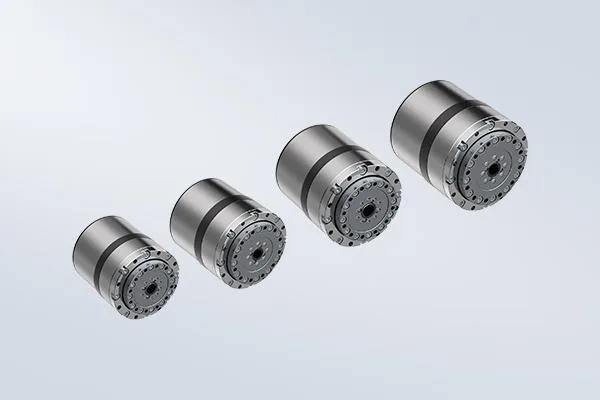
The percentages below are a consensus range across the major 2025–2026 humanoid BOM models. Exact splits move with the robot's degrees of freedom and whether hands are included, but the ranking is stable: the muscles cost more than the brain.
| Subsystem | Share of BOM | Typical count per robot | Leading Chinese suppliers |
|---|---|---|---|
| Rotary actuators (motor + harmonic/planetary reducer + encoder + driver) | ~20–28% | ~14–16 | Leaderdrive, Zhongda Leader, Sanhua, Haozhi |
| Linear actuators (motor + planetary roller screw) | ~15–22% | ~10–14 | Tuopu, Sanhua, Hengli, Beite, Wuzhou/Xinjian |
| Dexterous hands (2) | ~10–18% | 2 hands, 12–22 DOF | ZHAOWEI, DINGS, Paxini (sensing), Hasely |
| Sensors (force/torque, tactile, IMU, vision) | ~8–14% | 30–80+ channels | Kunwei, Paxini, Xinjingcheng, Orbbec |
| Controller & compute | ~5–9% | 1–2 controllers | Inovance, Estun control stacks; NVIDIA/Qualcomm silicon |
| Structural parts, skin, bearings | ~8–12% | ~72 bearings + frame | Hengshuai, Wuzhou, Lens Technology (skin) |
| Battery & power | ~3–6% | 1 pack | EV battery supply chain (CATL-class cells) |
| Cabling, fasteners, assembly, test | ~5–8% | — | Contract manufacturing base in Yangtze/Pearl River Delta |
Reading note: the actuator lines above overlap with how some banks report a single "actuator ~56%" figure — Morgan Stanley's number bundles rotary and linear modules plus their internal reducers, motors and screws. We separate them so each supplier category maps to a real component page.
Each rotary joint is a frameless torque motor driving a harmonic (strain-wave) reducer, with an encoder, torque sensor and driver in the same housing. A full-size humanoid uses 14–16 of them in the shoulders, elbows, waist, hips and ankles. The reducer is the expensive, hard-to-machine element — historically a Japanese duopoly of Harmonic Drive Systems and Nabtesco (RV) — and the single biggest localization story in Chinese robotics. Leaderdrive (绿的谐波) sells harmonic reducers and KGU integrated modules at roughly $900–1,250; Zhongda Leader's eRob plug-and-play joints run $700–1,050, against $1,500–3,000+ for an equivalent imported joint. New entrants like Hanyu/Tongchuan (harmonic reducers inside XPeng IRON's waist) and spindle-leader-turned-joint-maker Haozhi (self-developed ES/SP tooth profile, 30 arc-sec accuracy) keep adding capacity.
Linear joints (knees, hips, some elbows and fingers) convert motor rotation into push-pull force through a planetary roller screw — the most difficult precision component in the robot to machine at volume, and historically dominated by Rollvis (Switzerland), GSA and Ewellix (Sweden). It is also the line where Tesla's Optimus supply chain leans hardest on China: Tuopu Group ships linear and rotary actuator assemblies into Optimus (and AgiBot, Xiaomi), while Sanhua took a reported $685M Optimus actuator order in October 2025. Behind them, Northern Precision (Beite) is building an RMB 1.85B Kunsan roller-screw plant as a tier-2 Optimus hand-screw supplier, and Wuzhou Xinchun is scaling 2.1M sets/year via its Xinjian Transmission partnership. Chinese linear actuators run RMB 3,500–7,000 vs RMB 7,000–15,000 imported.
Hands are where cost is rising fastest, because a dexterous hand is essentially 10–22 tiny humanoids in miniature: coreless motors or frameless micro-motors, miniature ball screws or linkages, tendon drives, and fingertip tactile sensors. Two hands can absorb 10–18% of total BOM. ZHAOWEI commercialized China's first high-DOF hand (the ZWHAND series, 17 active DOF expandable to 20) and is investing RMB 800M in a hand industrial park; DINGS Motion supplies the 6–14 mm coreless motors and micro linear actuators inside many third-party hands; Paxini leads tactile sensing. Western equivalents — Shadow Robot (UK), Wonik (Korea) — cost several thousand dollars per hand; Chinese targets are an order of magnitude lower at volume.
A humanoid needs joint torque sensors (one per actuator), six-axis force/torque sensors in the ankles and wrists, tactile arrays in the fingertips, an IMU, and one or more RGB-D cameras or LiDAR for perception. Kunwei Technology and Xinjingcheng dominate domestic six-axis F/T sensors at a fraction of ATI (US) pricing; Paxini and Paixin cover tactile; Orbbec and Mech-Mind cover 3D vision; Hesai and RoboSense supply LiDAR where the design uses it. Chinese six-axis sensors typically land at 30–50% of an ATI equivalent.
The "brain" is a smaller BOM line than headlines suggest. Motion control runs on domestic controllers from Inovance and Estun; high-level perception/VLA models run on NVIDIA Jetson-class or Qualcomm silicon (an import line, but a few hundred dollars at module level). Structural frames, ~72 precision bearings per robot (Wuzhou, Hengshuai), and electronic skin (Lens Technology, Sanhua) take 8–12%. The battery borrows China's EV supply chain — high-density cells from a CATL-class base — for 3–6%.
| Metric | Chinese OEMs (Unitree G1, AgiBot A2, Fourier GR-2) | Tesla Optimus / Figure 02 |
|---|---|---|
| Stated/retail price | G1 from ~$16,000; Chinese models widely $16k–40k | Optimus long-run target ~$20,000; Figure not publicly priced |
| Reducer source | Localized (Leaderdrive, Zhongda, Laifual) at ~½ price | Mix of Japanese + Chinese (Tuopu/Sanhua assemblies) |
| Roller screw source | Xinjian, Hengli, Beite, Best — rapid localization | Tesla leans on Chinese tier-1/tier-2 (Tuopu, Sanhua, Beite) |
| Motors | Inovance, Kinco, Moons', DINGS — fully local | Largely custom + Asian supply |
| Structural cost advantage | Adjacent EV/electronics forging, casting & skin base | Tesla leverages its own EV scale; Figure contracts it out |
| Core moat | Cost, speed of mechanical iteration, component depth | Vertical integration, AI/data, automotive manufacturing |
The surprising finding of the 2025–2026 teardowns is how much even Tesla's cost advantage runs through China: its two most prominent actuator partners, Tuopu and Sanhua, are Chinese auto-suppliers-turned-robotics-houses. The real split is not "China vs the West" on components — it is companies that have localized the precision-mechanical stack versus those still paying import prices.
Industry teardowns put the BOM of a full-size humanoid at roughly $15,000–40,000 at low volume, with the mass-production target for units such as Tesla Optimus near $20,000. Actuators alone take 40–56% of the BOM.
The actuators — about 30 per robot (roughly 16 rotary and 14 linear), each bundling a motor, reducer or roller screw, encoder, torque sensor and driver. Morgan Stanley estimates actuators near 56% of total BOM. Dexterous hands are the second-fastest-rising cost line.
China localizes the entire precision-mechanical stack — harmonic/RV reducers, planetary roller screws, frameless and coreless motors, encoders, force sensors and bearings — at roughly half the imported price, adjacent to the world's largest electronics and EV manufacturing base.
2026 selection guides put Chinese planetary/RV joint modules at RMB 4,000–8,000 versus RMB 8,000–18,000 imported, and linear actuators at RMB 3,500–7,000 versus RMB 7,000–15,000 imported.
The $12B muscle market — Tuopu, Sanhua, Leaderdrive, Zhongda Leader.
The hardest component to localize — and how close China is.
The second cost frontier: ZHAOWEI, DINGS, Paxini.
The rotary-joint cost gap, quantified.
The pillar page mapping the entire stack.
A head-to-head spec and positioning comparison.
115+ company profiles, product pages and supplier teardowns for China's robotics ecosystem.