Inspire Robots — Profile
Beijing's micro actuator and dexterous hand pioneer.
Five-finger hands with hundreds of tactile points used to be a lab dream. China now makes them by the tens of thousands. Meet the suppliers driving the change.
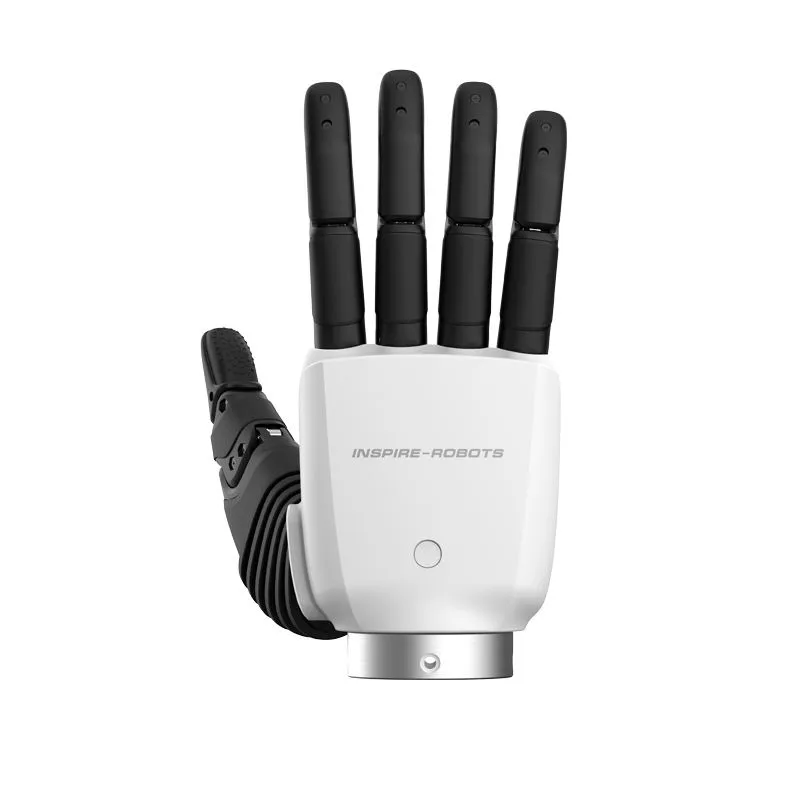
The most underrated shift in humanoid robotics in 2026 is not in the legs, the batteries or the AI — it is in the hands. A five-finger hand with a dozen-plus degrees of freedom and embedded tactile sensing was a research project for decades. Today, Chinese suppliers ship them by the tens of thousands. Here is who makes them.
Legs and balance have been largely solved by the leading humanoid makers. The hand is harder: every finger needs micro actuators, planetary roller screws, force control and — increasingly — tactile sensing arrays, all in a package that survives millions of cycles. For years this pushed cost into the tens of thousands of dollars per hand and kept volumes near zero. Chinese suppliers broke the cost curve, and the humanoid boom did the rest.
Beijing-based and founded in 2016, Inspire Robots made China's first commercially mass-produced five-finger dexterous hand in 2020 and has the deepest catalogue: 20+ models across the RH5E, RH56F1, E2, DFX and B series, built around in-house micro linear servo actuators. It delivered ~2,000 hands in 2024 and ~10,000 in 2025, with a stated target of 50,000-100,000 for 2026. Its hands power Agility Robotics, NEURA and a roster of universities from Tsinghua to UCL.
Linkerbot, a Beijing startup barely a few years old, is scaling faster than anyone: ~5,000 hands per month across five factories, and 10,000 cumulative units shipped by December 2025. It raised roughly US$150 million starting in April 2025 at a valuation near ¥20 billion, and supplies Unitree and AgiBot among others. It is the only maker mass-producing over 1,000 high-DOF hands a month.
Shenzhen's PaXini comes from the sensing side: it built the world's first 6D Hall-array tactile sensor and applies it in the DexH13 hand — 16 DOF, ~1,140 tactile units, ~3,420 signal channels and an 8 MP hand-eye camera per hand. Backed by BYD and JD.com, it is reportedly exploring a Hong Kong IPO at a ~¥10 billion valuation. For anyone who thinks touch is the next battlefield in dexterous manipulation, PaXini is the company to watch.
Not every hand comes from a supplier. Unitree and AgiBot each shipped over 5,000 hands in 2025 — Unitree's 12-DOF three-finger grips on the G1, AgiBot's vision-guided finger sensing on the A2 — and several full-stack humanoid makers treat hands as core IP rather than a commodity. The economics will decide how long that lasts: if specialist suppliers keep halving cost each year, even the integrated makers will buy rather than build.
2026 is the year the hand went from bottleneck to scale. Combine Inspire's 10,000-unit year, Linkerbot's 5,000-per-month output and the integrated makers' in-house lines, and China is on track for well over 100,000 dexterous hands a year — more than the rest of the world combined. That scale is what finally makes the "hands race" a supply-chain story rather than a research story.
Beijing's micro actuator and dexterous hand pioneer.
The volume machine mass-producing dexterous hands.
Shenzhen's tactile sensing and dexterous hand maker.
The reducers inside every robot joint, ranked.
Profiles, product pages and supplier analysis for China's robotics ecosystem.