AgiBot — Profile
Shanghai's embodied-AI flagship and its A2 humanoid line.
One is China's most-shipped compact humanoid; the other is the full-size flagship chasing commercial scale. Here is the honest A2 vs G1 comparison for 2026.
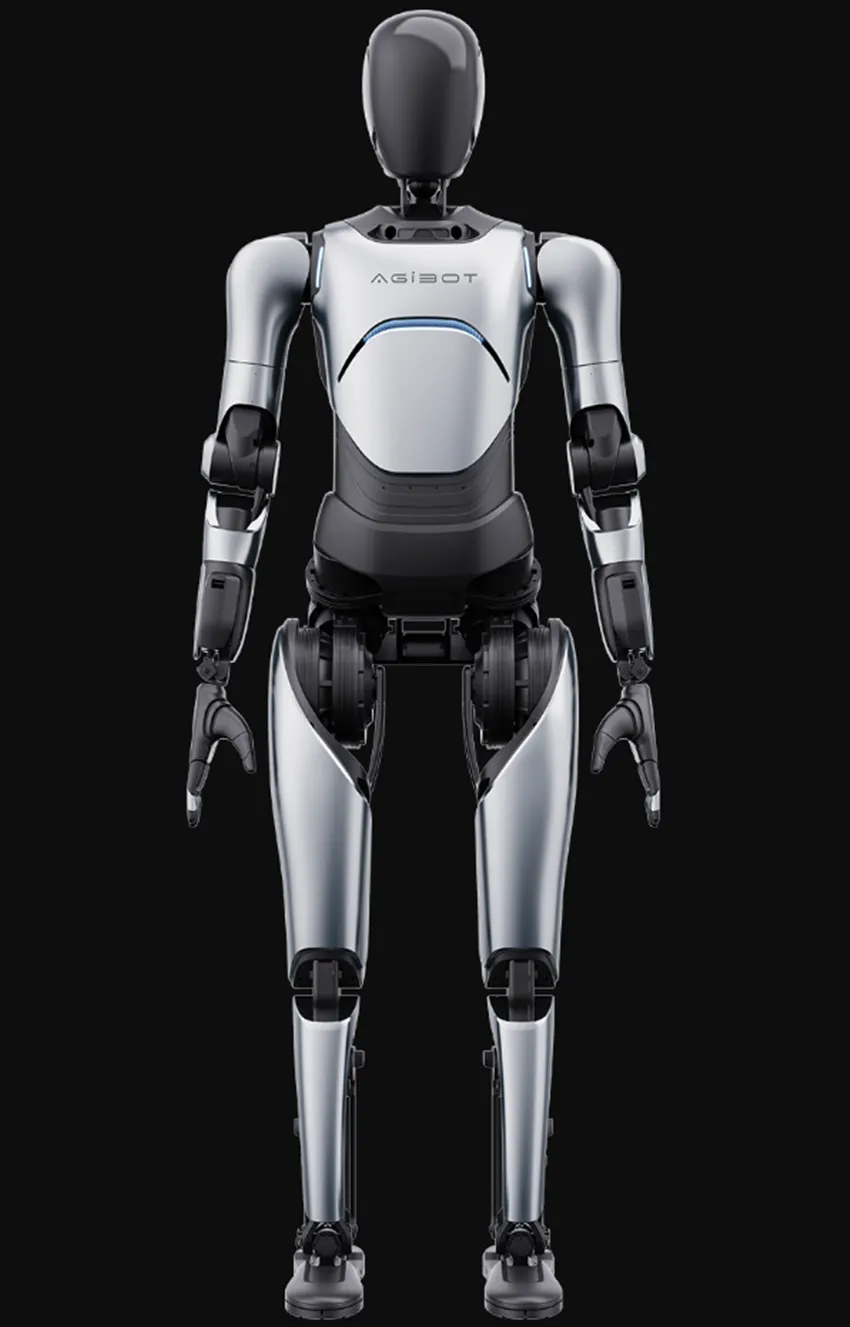
Searching for "AgiBot A2 vs Unitree G1" means you have moved past the humanoid hype and are actually comparing machines. Good. These are the two best-known names in Chinese humanoids — and they sit on opposite ends of the market.
The A2 and the G1 are not really rivals in the same lane. Unitree's G1 is a ~127 cm, ~35 kg, US$16,000-class compact humanoid engineered for volume — the most-shipped humanoid on the planet. AgiBot's A2 is a full-size 169 cm, ~69 kg flagship aimed at commercial deployment — marketing, guidance, retail, logistics and assembly pilots. One wins on price and reach; the other wins on human scale and service capability.
| Company | AgiBot (Shanghai) | Unitree (Hangzhou) |
|---|---|---|
| Robot | Yuanzheng A2 | G1 |
| Height / weight | 169 cm / ~69 kg | ~127 cm / ~35 kg |
| Degrees of freedom | 40+ (body, plus hand DOF) | 23 body + 12 hand |
| AI compute | ~200 TOPS platform | Unitree AI ecosystem / SDK |
| Hands | Dexterous, vision-guided finger sensing | Three-finger, 12 DOF |
| Battery / runtime | 700 Wh, ~2 h, hot-swap | Swappable, ~2 h |
| Primary market | Commercial service, guidance, industrial pilots | R&D, education, demos, volume sales |
| Price | Not listed (flagship, commercial) | From ~US$16,000 |
| Strategy | Commercial scale + embodied-AI brain | Cost + volume |
AgiBot was founded in 2023 by Huawei's former "Genius Youth" engineer Peng Zhihui (稚晖君), and it raised money at astonishing speed. The A2 is the machine that turned that attention into a product line. It holds a Guinness record for continuous walking (106 km in three days), has run over 360 fault-free hours in deployments, and is certified for sale in China, the US and Europe. It is one of the first Chinese humanoids positioned explicitly as a commercial service robot, not a research platform.
The G1 is the opposite bet: make a humanoid cheap enough to ship by the thousands. Its M107 joints, 12-DOF hands and sub-US$20,000 price turned a lab curiosity into the reference hardware for the entire Chinese ecosystem. If you want a humanoid in your lab today, the G1 is the default; that is its superpower.
These two companies are racing in different weight classes, and both are winning their own race. Unitree is proving humanoids can be cheap; AgiBot is proving they can be commercially deployed at full human scale. Watch the crossover point: the day a full-size, service-grade humanoid approaches G1 pricing is the day this comparison stops being academic.
Shanghai's embodied-AI flagship and its A2 humanoid line.
Hangzhou's cost-engineering humanoid and quadruped maker.
Every G1 spec — height, weight, DOF, battery, price.
The budget humanoid vs the industrial full-size challenger.
AgiBot, Unitree and 100+ more Chinese robotics profiles in the database.