Unitree Q3 2026 Earnings: Revenue Accelerates to +70%, but Profit Dipped as R&D Triples
The rival leader's first post-IPO report — same week, same R&D-vs-profit tradeoff.
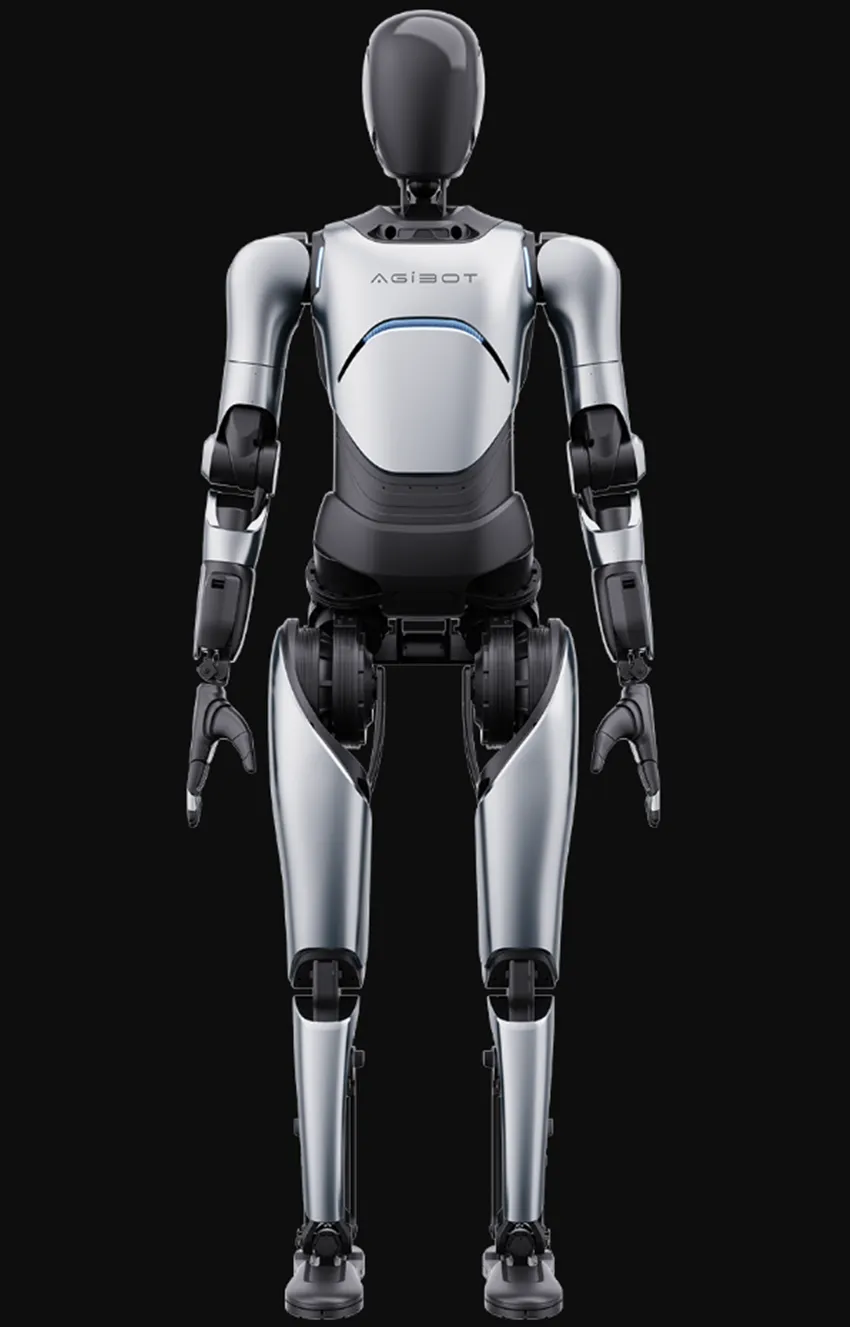
On October 29, at the Shanghai Expo Center, AgiBot (智元机器人) held its Innovation Day 2026 and declared itself the world's most-produced general humanoid maker — 20,000 robots off the line, nearly ¥2B of first-half revenue. The bigger story is the scoreboard it is trying to change: instead of "how many robots shipped," AgiBot wants the industry measured in Worken — the effective intelligent work hours robots actually deliver on site.
| Metric | Company-disclosed figure | Context |
|---|---|---|
| Cumulative robots produced | 20,000 general AI robots | 20,000th unit off the line in September 2026 |
| H1 2026 revenue | ≈ ¥2 billion | One of the highest-revenue general humanoid makers |
| H1 2026 shipments | ≈ 9,700 robots | ~48% of the year-to-date production figure |
| Global humanoid market share | 43% (claimed) | Company statement; not independently verified |
| Worken formula | Active robots × autonomous hours × output efficiency | Proposed industry metric for deployed output |
All figures as stated by AgiBot at Innovation Day 2026 (Oct 29, Shanghai) and reported by Chinese media including National Business Daily. None are audited; treat market-share claims as marketing figures pending third-party data.
Peng Zhihui, AgiBot's co-founder, president and CTO — the former Huawei "genius" engineer known to hundreds of millions as the Bilibili robotics creator Zhi Hui Jun — opened the framing shift: "Token measures how much a machine thinks; Worken measures how much it acts." The proposed formula:
Worken = Number of active robots × Autonomous working hours × Output efficiency ratio
AgiBot illustrated Worken with real deployments: Longcheer production-line loading/unloading — 2,956.8 Worken (8 robots, 52h, 0.7×); Guangzhou Metro security-screening guidance — 14,400 Worken (120 robots, 24h, 0.5×); Zhuhai Chimelong entertainment — 480 Worken (300 robots, 18h, 0.6×); ASD retail shopping guidance — 10,269 Worken (90 robots). Two fleets of equal size can differ hugely in useful output — that is the point.
The metric is a proposal, not a standard — AgiBot itself says task-specific benchmarks must be refined with operating data, and meaningful comparison depends on how "acceptable output" is defined per task. It also reframes the business model: Peng says billing need not be either/or — companies can sell hardware, or sell service, "like PaaS and SaaS in software." The framework appears in the 2026 Embodied Intelligence Industry Innovation Report compiled by China Economic Information Service and the CAICT-affiliated Shanghai Industrial Innovation Center.
The hardware story was the AHA3 (third-generation AgiBot Humanoid Architecture), which AgiBot says is the first to integrate locomotion, interaction and task-execution intelligence into a single control architecture — motor-drive, integrated computing, Wi-Fi 6/5G connectivity. Supporting announcements:
For manufacturing and logistics, AgiBot launched G2 Max: 21 degrees of freedom, dual-arm handling up to 40 kg, working height 0.1–2.5 m.
GO-3 Preview is the third-generation embodied foundation model, built on a framework AgiBot calls WRAM (World Reasoning Action Model) that connects task reasoning, outcome prediction and action selection. AgiBot reports first-place results on RoboDojo, RoboTwin and RoboColiseum (first place in RoboDojo task success rate and process score), and plans to open source GO-3 by the end of 2026.
WITA-Omni 1.0 targets the interaction layer: an omni-modal end-to-end model combining visual perception, speech, real-time full-duplex dialogue, facial expressions and physical actions, supporting 100+ languages and 29 dialects. AgiBot says it currently ranks first on embodied-interaction benchmarks including Daily-Omni. As with GO-3, these are company-reported results, not independently verified.
Both were framed against the open question Peng and co-president Yao Maoqing fielded: will general LLMs eventually "降维打击" embodied models? Their answer is layered — general models may raise long-horizon planning (System 2), but real-time motor control at 100–1,000 Hz, integration, deployment engineering and task-specific data remain deeply coupled to the robot body. Yao's line: "Embodied models can't just be trained; they have to be worked into existence" (具身模型不能光靠"训"出来,更要靠"干"出来).
Alongside the models, AgiBot formally released Lingqu OS 1.0 (Link-U), its embodied-AI operating system, with selected partners trialing version 1.0 and full open source planned by the end of 2026. It is also working with the OpenAtom Foundation to build a Chinese humanoid-robot open-source community. The strategy mirrors the AI-model playbook: publish the base, win the ecosystem, monetize hardware and services above it.
Innovation Day sat on uncomfortable industry data. AgiBot cited a CAICT-linked report that a large share of humanoid robots run fewer than 10 days per month, with entertainment performance and science-education data collection accounting for over 60% of shipments and smart manufacturing only 13%. Meanwhile, primary-market funding cooled sharply in H2 2026 after more than 300 rounds and nearly ¥100B in H1.
AgiBot's own Chimelong deployment shows the operating reality: 300+ robots across 100+ locations initially needed a near 1:1 robot-to-engineer ratio. Senior VP Wang Chuang says that has improved to 3:1, with a year-end target of 10:1 and 20:1 next year — which he frames as "5% of my headcount budget," a level customers can stomach.
Peng's closing framing is the thesis to remember: "Getting 10,000 humanoids off the line is a manufacturing victory; getting 10,000 humanoids to actually hold jobs is the physical-AI victory." And Yao set the industry's milestone: "At least 10,000 robots working steadily in Chinese factories is the turning point that matters." Whether Worken becomes the industry's standard scoreboard — or just AgiBot's marketing — will be tested by exactly that number.
On October 29 in Shanghai, AgiBot said it had produced 20,000 general AI robots cumulatively, with roughly ¥2B of first-half 2026 revenue, and claimed 43% of the global humanoid robot market (company-reported). It unveiled the Worken metric, the AHA3 architecture, GO-3 Preview, WITA-Omni 1.0, new dexterous hands and Lingqu OS 1.0 with a year-end open-source plan.
Worken is AgiBot's proposed productivity metric: Worken = active robots × autonomous working hours × output efficiency ratio. Peng Zhihui: "Token measures how much a machine thinks; Worken measures how much it acts." It shifts the industry scoreboard from units shipped to useful work delivered.
AgiBot says it produced 20,000 general AI robots cumulatively (20,000th in September), shipped about 9,700 robots in H1 2026 and booked nearly ¥2B of H1 revenue, claiming 43% of the global humanoid market. All company-disclosed, not audited.
GO-3 Preview is AgiBot's third-generation embodied foundation model built on a WRAM framework; it reports first place on RoboDojo, RoboTwin and RoboColiseum and plans year-end open source. WITA-Omni 1.0 is an omni-modal interaction model supporting 100+ languages and 29 dialects.
China's embodied-AI industry is moving from counting robots produced to counting robots working steadily in factories, warehouses and shops. A CAICT-linked report cited by AgiBot says many humanoids run fewer than 10 days a month, with entertainment and data collection over 60% of shipments and manufacturing only 13%.
Disclaimer: This article is independent editorial analysis based on AgiBot's public event materials and Chinese press coverage. Production, revenue and market-share figures are company-disclosed and have not been independently verified or audited; nothing here is investment advice.
The rival leader's first post-IPO report — same week, same R&D-vs-profit tradeoff.
How public markets are pricing the humanoid buildout.
The component supply chain behind 20,000-robot production runs.
Where the money went as funding cooled in H2 2026.
We are tracking every major launch, funding round and earnings release in China's robot industry.