Unitree Q3 2026 Earnings Preview
The humanoid side of the same October earnings week.
On October 26–27, Shenzhen Inovance Technology (300124.SZ) filed its Q3 2026 report. The headline — revenue up nearly 20% — looks like another smooth quarter for China's biggest domestic industrial-automation vendor. Dig one layer down and the picture splits: general automation is booming on AI capex, while margins, cash flow and the NEV-powertrain business are all soft. Here is the full read, built only on the official filing and verified reporting.
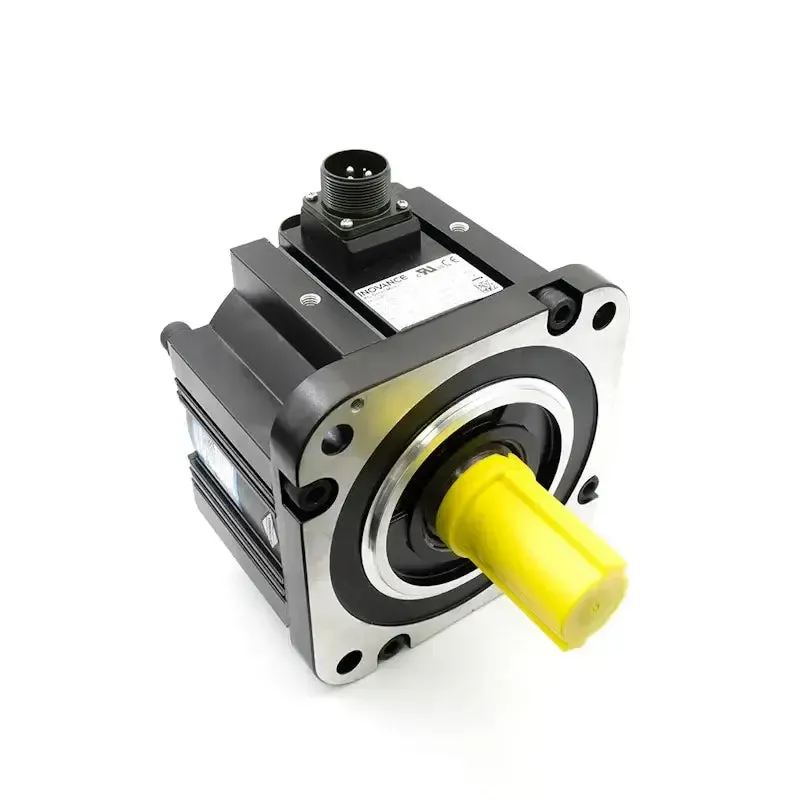
Inovance is the closest thing China has to a domestic Siemens: its servo systems, variable-frequency drives and small PLCs already lead Chinese brands in share, and it is now pushing into large PLCs, industrial robots and — its newest growth story — "industrial physical AI." The Q3 report is therefore read as a proxy for the whole Chinese automation and robotics supply chain. The short version: demand is real and broadening, but the profit and cash conversion that investors usually reward is lagging the top line.
| Metric (Jan–Sep 2026) | Value | YoY |
|---|---|---|
| Revenue | ¥37.96B | +19.88% |
| Net profit (attributable) | ¥4.40B | +3.38% |
| Net profit excl. non-recurring (扣非) | ¥3.91B | +0.49% |
| Blended gross margin | ~28.24% | −1.03 pct |
| Net margin | ~11.59% | −1.85 pct |
| R&D expense | ¥3.43B (9.02% of rev.) | vs ¥2.99B |
| Operating cash flow | ¥0.90B | −77.22% |
Source: Inovance 2026 Q3 report (cninfo, Oct 27); 21st Century Business Herald breakdown. Margins are calculated from disclosed revenue and cost of goods sold.
Q3 standalone revenue was ¥13.28B (+19.1% YoY, −8.6% QoQ). Reported net profit was ¥1.59B (+23.6%) — stronger than the nine-month trend. But recurring (扣非) net profit was ¥1.15B, down 5.4% YoY. The ¥437M gap between the two lines is almost entirely ¥419M of fair-value gains on financial assets and liabilities (largely mark-ups on equity investments), not operating performance.
This matters because it is the second consecutive quarter where headline profit overstates the underlying business. Strip out the investment mark-to-market and the Q3 industrial-automation recovery is not yet dropping to the bottom line — price competition in NEV parts, higher R&D (¥3.43B in nine months, ~9% of revenue) and a ¥542M inventory impairment (up from ¥232M a year earlier) are eating the gains.
| Segment (9M 2026) | Revenue | YoY |
|---|---|---|
| General automation (servo / inverter / PLC-HMI) | ~¥15.9B | +33% |
| — of which servo systems | ~¥6.9B | — |
| — of which inverters (VFDs) | ~¥4.8B | — |
| — of which PLC + HMI | ~¥1.9B | — |
| Smart-elevator products | ~¥3.8B | +6% |
| NEV powertrain systems | ~¥15.5B | +8% |
| Emerging: smart robots + digital energy | ~¥2.1B | +88% |
Source: company investor-activity records and Q3 report, via Securities Times and 21st Century Business Herald. Segment revenue is company-disclosed approximate sales; the robot figure is bundled with digital energy, not standalone.
Management attributes the 33% general-automation surge to three forces: AI supply-chain capex (data-center build-out pulling optical-module, PCB and semiconductor-equipment orders), a recovery in legacy downstream industries (lithium battery, machine tools, auto manufacturing, logistics, consumer electronics), and export follow-along as Chinese machine builders expand overseas. By H1 2026 Inovance held ~6.7% of China's mid-large PLC market and ~14.6% of the small-PLC market — both No.1 among domestic brands, still far behind Siemens domestically but closing the import-substitution gap. A functional-safety large PLC for continuous-process lines is now in customer trials at mining, port and municipal sites.
The NEV powertrain line (its United Power / joint-venture business) grew only 8% at ¥15.5B — a familiar story of brutal EV price competition compressing margins. Notably, management's own new equity-incentive targets exclude this business, which tells you where internal growth expectations sit.
Robotics has become Inovance's narrative, and the quarter delivered concrete product evidence rather than just roadmaps:
The emerging segment (robots + digital energy) at ~¥2.1B is still small (~5.5% of revenue), but the 88% growth rate and the explicit "Android of industrial physical AI" positioning — supplying the platform, not the last-mile vertical know-how — is the 2027 growth option the market is starting to price.
The numbers investors should watch more than the P&L this quarter:
Management frames this as growth-stage working-capital investment. The bull read: they are stocking parts to win the AI capex upcycle and delivery will convert the cash back in Q4. The bear read: receivables and inventory are building ahead of a demand cycle that may not hold. Q4 working-capital trends will settle it.
Three actions inside one September week carry the strongest signal:
| Action (late Sep) | Detail |
|---|---|
| 8th equity incentive plan | Vested on 2026–2029 recurring net profit excluding the NEV (United Power) business: ≥¥4.9B / 5.7B / 6.8B / 8.3B |
| Insider buy-in | Largest shareholder Inovance Investment (chairman Zhu Xingming concert party) plans to add ¥150–200M of shares over six months |
| Buyback already running | 2.476M shares repurchased by Sept 30 for ¥162M |
Source: company filings and September investor relations records. The 2026 bar of ¥4.9B ex-NEV recurring profit compares with 9M recurring profit of ¥3.91B (which includes NEV) — implying H2 must deliver a meaningful step-up, consistent with the Q4-loaded demand view.
Inovance is also pursuing an H-share listing in Hong Kong (an application proof was filed on HKEX), which would add offshore capital as it funds capacity and the robot/AI push.
Nine-month revenue was 37.96 billion yuan (+19.88%), net profit attributable to shareholders 4.398 billion yuan (+3.38%), and recurring net profit 3.907 billion yuan (+0.49%). Q3 standalone revenue was 13.28 billion yuan (+19.08%) with net profit of 1.589 billion yuan (+23.55%), but recurring net profit fell 5.37% to 1.151 billion yuan.
Blended gross margin fell about 1.03 percentage points to 28.24%, and net margin slipped about 1.85 points to 11.59%. Reasons include price pressure in NEV powertrain, higher R&D spending (~9% of revenue), and rising inventory and credit impairment charges. Q3's headline net profit was also boosted by about 419 million yuan of fair-value gains on equity investments rather than operations.
General-purpose automation grew about 33% to roughly 15.9 billion yuan, driven by AI data-center, optical-module, PCB and semiconductor-equipment demand. The emerging smart-robot and digital-energy business grew about 88% to 2.1 billion yuan. NEV powertrain grew only about 8% to 15.5 billion yuan.
In September it launched an "industrial physical AI" agent platform, followed by an AI welding solution (5-minute weld-path generation) and the wheeled InoBot W1 embodied robot shown at CIIS on October 13, which demoed automated loading of a welding cell at over 20% higher output. The company positions itself as the platform layer, not the vertical application layer.
Operating cash flow fell 77% to 895 million yuan in the nine months as inventory rose 54% to 12.46 billion yuan and receivables grew to 13.33 billion yuan. Management calls this growth-stage working capital; Q4 collections and inventory turnover are the numbers to verify the story.
Disclaimer: China Robotics Insider is an independent editorial site. Nothing on this page is investment advice; every figure should be verified against the official cninfo filing before any decision.
The humanoid side of the same October earnings week.
Where Inovance's servo business feeds in.
The core linear-motion component race.
How public-automation money flows into robotics.
Unitree reports Q3 on October 29. We will publish the numbers as they land.